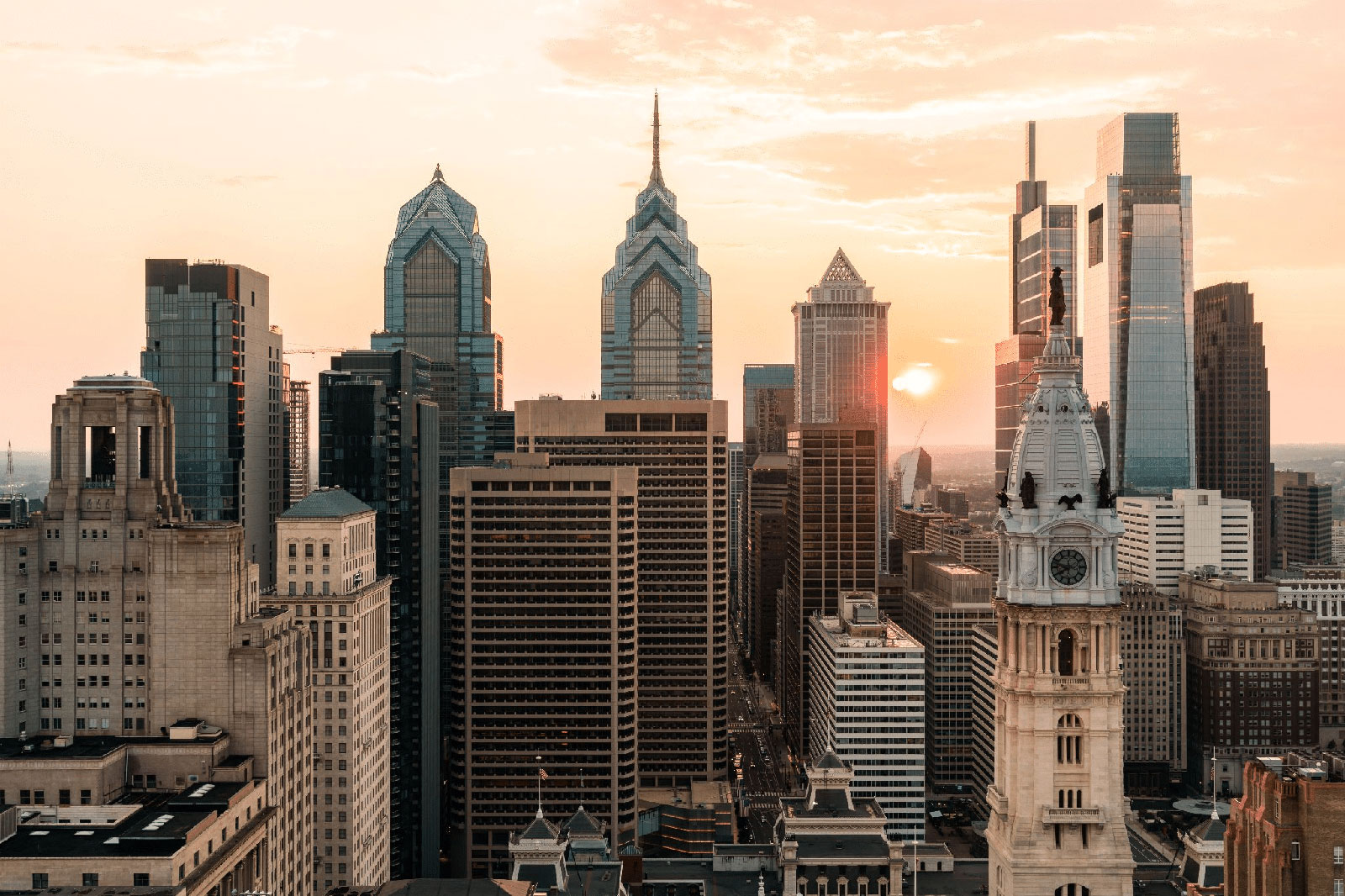
As office vacancy rates remain elevated in major U.S. cities, Philadelphia is increasingly exploring office-to-residential conversions as a potential strategy to revive underutilized buildings while addressing the city’s housing needs.
In recent months, city officials, developers, and planning experts have begun discussing zoning adjustments, financial incentives, and redevelopment programs aimed at encouraging the transformation of older office properties into residential housing.
For Philadelphia, the approach represents both an economic development strategy and an urban planning opportunity — one that could reshape the future of Center City.
Rising Office Vacancies Create Redevelopment Opportunities
Philadelphia’s office market, like many across the country, continues to face challenges tied to remote and hybrid work patterns.
Several older office buildings in Center City have experienced declining occupancy levels as tenants consolidate space or relocate to newer, more modern properties.
These shifts have created opportunities for developers to reposition aging office buildings through adaptive reuse projects.
In some cases, residential conversions may offer a viable path forward for properties that struggle to compete in today’s office leasing market.
Zoning and Regulatory Considerations
Converting office buildings into residential housing often requires navigating complex zoning regulations and building code requirements.
Philadelphia’s zoning framework already allows for a mix of uses in many areas of Center City, but certain properties may still require zoning adjustments or approvals to accommodate residential redevelopment.
Developers pursuing office conversions must also address additional regulatory considerations, including:
- building code requirements for residential occupancy
- window access and natural light standards
- plumbing and mechanical system upgrades
- structural modifications to accommodate apartment layouts
Because many office buildings were originally designed with deep floor plates and limited residential infrastructure, these conversions can involve significant redevelopment work.
Financial Incentives May Play a Key Role
In addition to zoning flexibility, financial incentives may be necessary to support large-scale office conversion projects.
Cities across the country have begun introducing programs designed to offset the high costs associated with adaptive reuse.
Philadelphia policymakers have discussed potential tools such as:
- tax incentives for residential conversions
- redevelopment grants
- zoning bonuses for mixed-income housing
Such programs could help developers bridge the financial gap that often exists between the cost of conversion and the value of the completed residential project.
Housing Supply and Downtown Revitalization
Advocates for office conversions argue that the strategy could provide several benefits for the city.
By transforming underutilized office space into housing, Philadelphia could increase its residential population in Center City, supporting restaurants, retail businesses, and neighborhood activity.
Additional housing supply could also help address affordability pressures across the region.
Urban planners increasingly view residential density as a key ingredient in maintaining vibrant downtown districts, particularly as traditional office demand evolves.
Challenges Remain for Large-Scale Conversions
Despite growing interest, not every office building is a candidate for residential conversion.
Structural layouts, floor plate depth, and mechanical systems can make certain properties difficult or prohibitively expensive to convert.
As a result, developers and city planners are focusing primarily on older office buildings that may be better suited for adaptive reuse.
Market conditions will also play an important role in determining whether conversions become a widespread development strategy in Philadelphia.
A New Phase for Center City Development
Philadelphia’s exploration of office-to-residential conversions reflects a broader shift taking place in many major U.S. cities.
As office markets adjust to changing workplace patterns, urban leaders are increasingly looking for ways to repurpose underutilized buildings and create more balanced downtown neighborhoods.
While many policy discussions are still in early stages, the coming years may determine whether office conversions become a significant part of Philadelphia’s development landscape.
For developers, investors, and city officials alike, the outcome could help define the next chapter of Center City’s evolution.
Subscribe to Real Observer
Stay ahead of the market. RealObserver covers New York Tri-state development, capital markets, and real estate intelligence every weekday. Subscribe free →