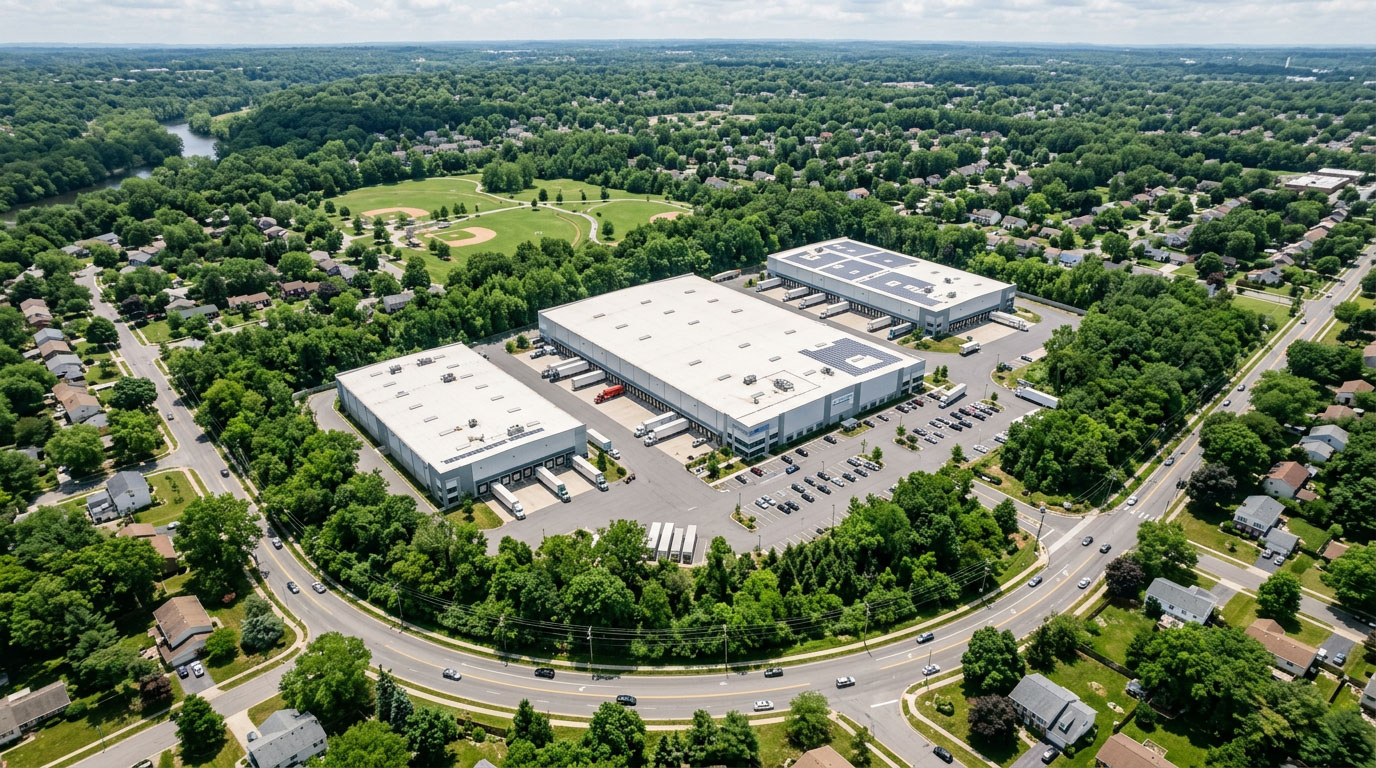
New Jersey’s industrial development boom has fueled unprecedented growth in warehouse construction over the past decade. But in 2026, a growing number of municipalities are taking a step back, implementing temporary moratoriums, zoning restrictions, and new planning studies aimed at slowing the pace of logistics development.
Across the state — particularly in counties along the New Jersey Turnpike and Interstate 78 corridors — local officials are responding to community concerns about truck traffic, infrastructure strain, and environmental impacts tied to large distribution centers.
The result is a wave of local policy decisions that could reshape how and where industrial development occurs across the state.
For developers, investors, and logistics companies, the shift represents a new phase in New Jersey’s industrial real estate market, where zoning policy is increasingly influencing project feasibility.
Industrial Development Boom Drives Local Concerns
New Jersey has emerged as one of the most important logistics hubs in the United States, driven by its proximity to the Port of New York and New Jersey, major interstate highways, and a dense regional consumer base.
Over the past several years, developers have delivered millions of square feet of warehouse and distribution space, serving e-commerce companies, retailers, and third-party logistics providers.
However, the rapid expansion has also sparked concerns in many communities.
Local officials and residents have increasingly raised questions about:
- heavy truck traffic on local roads
- air quality impacts from diesel vehicles
- loss of industrial or agricultural land
- infrastructure capacity for large logistics facilities
In response, several municipalities have begun pausing approvals for new warehouse projects while they review zoning policies.
Municipalities Consider Moratoriums and Zoning Changes
Across New Jersey, local governments are adopting a range of policy tools designed to slow or reassess warehouse development.
Some municipalities have enacted temporary moratoriums on new warehouse applications, giving planning boards time to study the long-term impacts of industrial growth.
Others are revising zoning ordinances to impose new requirements on logistics projects, such as:
- increased setback distances
- truck routing restrictions
- limits on building size
- enhanced traffic impact studies
In certain cases, towns are considering new industrial zoning overlays that would concentrate logistics development in specific corridors while protecting residential and agricultural areas.
These policy changes are often the result of months of public meetings, planning board discussions, and community feedback.
Statewide Debate Over Industrial Growth
The debate surrounding warehouse development has also begun to attract attention at the state level.
New Jersey officials have acknowledged the economic benefits of logistics development, including job creation and tax revenue, while also recognizing the growing concerns expressed by local communities.
The state’s logistics industry plays a crucial role in supporting supply chains across the Northeast, particularly as e-commerce continues to expand.
At the same time, policymakers are increasingly focused on balancing economic growth with environmental considerations and local quality-of-life issues.
As a result, discussions are underway regarding potential statewide planning strategies that could guide future warehouse development.
Implications for Developers and Investors
For developers active in New Jersey’s industrial market, the spread of local moratoriums introduces a new layer of uncertainty into the entitlement process.
Projects that might previously have moved quickly through municipal approvals may now face longer timelines as planning boards evaluate updated zoning rules and community concerns.
Developers may also need to incorporate additional planning considerations into their projects, including:
- traffic mitigation strategies
- environmental impact studies
- enhanced site design and buffering
At the same time, limited new supply could reinforce the strong fundamentals of existing industrial properties, potentially supporting long-term rent growth in key logistics markets.
A Turning Point for New Jersey’s Logistics Landscape
New Jersey’s industrial sector remains one of the strongest in the country, supported by strategic infrastructure, proximity to major consumer markets, and continued demand from logistics and distribution companies.
However, the emergence of warehouse moratoriums suggests the next phase of development may be shaped as much by local zoning policy as by market demand.
As municipalities reassess their industrial planning frameworks, developers and investors will be watching closely to see how these policies ultimately affect the state’s logistics landscape.
For now, the message from many communities is clear: the warehouse boom is continuing — but the rules governing where and how these projects are built are evolving.
Subscribe to Real Observer
Stay ahead of the market. Real Observer covers New York Tri-state development, capital markets, and real estate intelligence every weekday. Subscribe free →