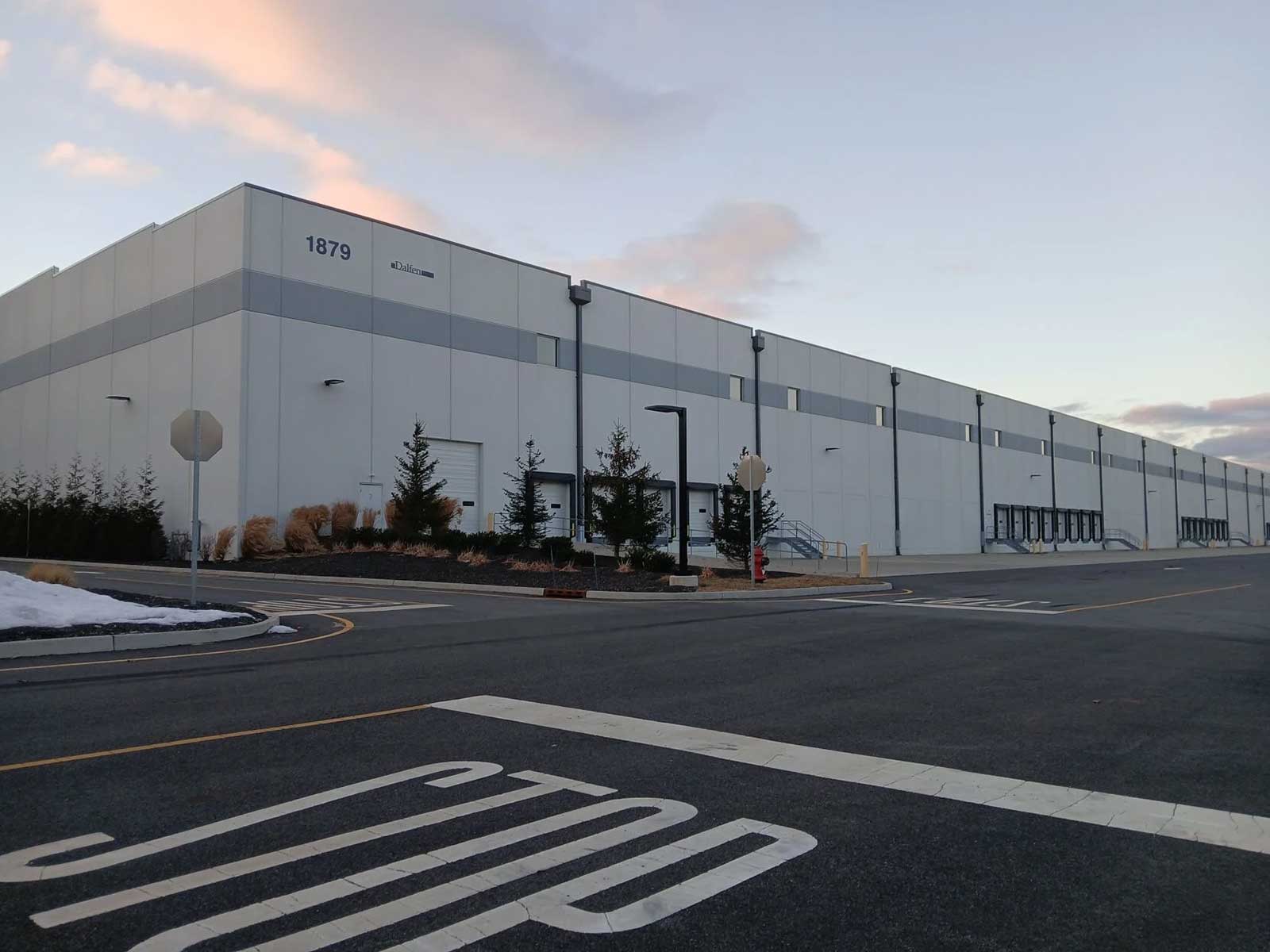
A federal purchase of a large industrial warehouse in Morris County is drawing national attention — not only for its political implications, but also for what it signals about the evolving use of industrial real estate.
The U.S. Department of Homeland Security recently acquired a 470,000-square-foot warehouse at 1879 Route 46 in Roxbury, New Jersey for $129.3 million, with plans to convert the facility into an immigration detention and processing center.
The property sits in the Ledgewood section of Roxbury Township along the Route 46 corridor, a region known primarily for suburban residential neighborhoods and commercial retail centers.
The federal acquisition has sparked intense debate among local officials, residents, and policymakers — while also highlighting a broader national trend of governments acquiring industrial buildings for nontraditional uses.
A Major Industrial Property Sale
The warehouse property was previously owned by Dalfen Industrial, working alongside a Goldman Sachs asset management real estate fund.
Federal records show the sale closed in February, transferring ownership of the large logistics-style facility to the Department of Homeland Security.
At roughly 470,000 square feet, the building ranks among the larger industrial properties in Morris County. Local officials say the facility could ultimately house as many as 1,500 detainees once converted for federal use.
The purchase price — $129.3 million — significantly exceeded the property’s previously assessed value of about $62 million, according to public records.
The facility had reportedly remained vacant for nearly two years before the federal government completed the acquisition.
Local Officials Push Back
The announcement quickly triggered opposition from local leaders and residents in Roxbury Township.
Town officials said the warehouse’s location in a suburban area with limited infrastructure raises concerns about water, sewer capacity, and traffic impacts.
The township council has passed a resolution opposing the project and indicated it may pursue legal action to challenge the facility.
Residents have also packed local meetings and organized protests, arguing that the federal government moved forward without sufficient local consultation.
The controversy has drawn attention from state and federal lawmakers as well, turning the proposed facility into a major political issue in New Jersey.
A Growing National Strategy
The Roxbury acquisition is part of a broader federal effort to expand immigration detention capacity by purchasing and retrofitting commercial warehouse buildings.
Congress recently allocated tens of billions of dollars toward expanded immigration enforcement and detention infrastructure, allowing federal agencies to acquire large industrial facilities across multiple states.
Officials have been exploring warehouse conversions as a faster and more cost-effective way to expand detention capacity compared with constructing entirely new facilities.
Across the country, immigration authorities have reportedly evaluated or purchased warehouse properties in several states as part of this strategy.
The approach represents a major shift in how detention infrastructure is developed, effectively repurposing the nation’s logistics and distribution building stock.
Real Estate Implications
From a real estate perspective, the Roxbury deal highlights how industrial properties — one of the most sought-after asset classes in recent years — are increasingly being considered for alternative uses beyond logistics and distribution.
Several factors make warehouses attractive candidates for conversion:
- large floor plates
- high ceilings
- significant utility capacity
- secure, single-tenant layouts.
While most industrial buildings remain focused on e-commerce logistics and manufacturing, government acquisitions such as the Roxbury facility demonstrate the flexibility of these assets.
However, projects like this also reveal potential friction points when industrial properties transition to uses that may conflict with local zoning expectations or community priorities.
Final Thoughts
The federal government’s purchase of the Roxbury warehouse illustrates how shifting policy priorities can quickly reshape the trajectory of major real estate assets.
What had been a vacant industrial property marketed to logistics tenants is now poised to become a federal detention facility — a transformation that has ignited both political and community debate.
For the real estate industry, the transaction underscores a broader reality: in an era of evolving government policy and infrastructure needs, the future use of large commercial properties may increasingly extend beyond traditional private-sector tenants.
Subscribe to Real Observer
Stay ahead of the market. Real Observer covers New York Tri-state development, capital markets, and real estate intelligence every weekday. Subscribe free →